As a designer, I respect the traditional medium of the book, but I don’t let myself be restricted by it. I want to develop the medium’s meaning and importance, as well as understand its limitations. Making books is about composing text, images, and information in a bound form—freezing content, in contrast to the flux of the Internet, whereby a document is created that, in turn, gives rise to reflection and encourages further investigation. In order to maintain the vitality of the book and, above all, to take the medium a step further, it is important to me that I am able to experiment freely with my designs without fear of failure. I don’t allow myself to be restrained by what is technologically possible or impossible.
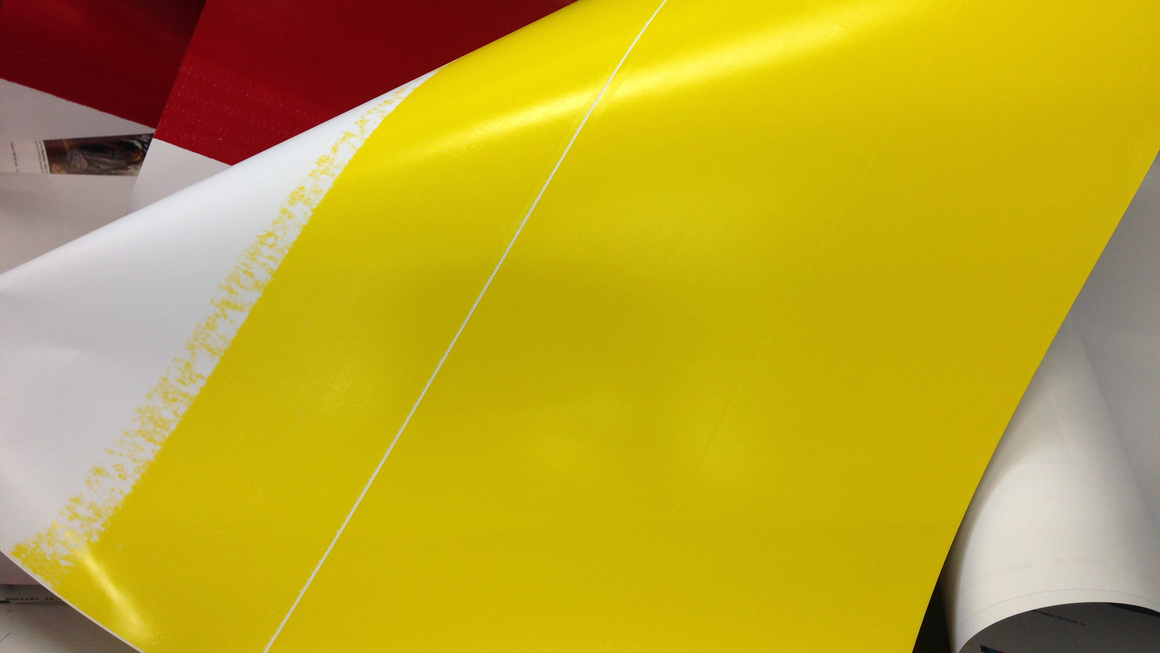
The materiality of the book is crucial for the experience: the choice of paper, the size of the book, the intensity of the printed colors. When one of my books is in production, I follow the printing and binding process precisely. I control the process from beginning to end. Not because of any mistrust of the printers—on the contrary, I do this more out of curiosity about what happens when the machines get started and to see what comes out after weeks, months, or sometimes years of working on a project. Even what is thrown away at the printer—what they consider wrong or not good enough—is inspiration for developing a sense of what is truly possible.
I often find myself having to defend the book as a medium and as an object, as if there is a question that books have a right to exist. I don’t think they need defending: in this superficial and hasty age of the Internet, each book brings delay and depth. These are just a couple of a book’s great qualities. And with the insights and innovative structures that have originated in new media, the book has received a new impetus, transforming the medium from a linear structure to something you browse through, just like a website.
The biggest threat to books seems to be the fact that people hardly read anymore, or at least much less than they did before. But I believe we are at the beginning of the renaissance of the book.
The book is dead.
Long live the book!
Irma Boom is an Amsterdam-based graphic designer who specializes in books.
This text is an excerpt from Maharam Stories, published by Skira Rizzoli in 2015, and designed by Irma Boom.